

Night strategist
Rei Kurosaki
A cool, dangerous game-maker who suits suspenseful banter, pursuit scenes, and sharp verbal chemistry.
Start chat→Character.AI prompts
Copy-ready character ai prompts romance and romantic AI roleplay prompts for slow-burn scenes, openings, pacing and boundaries.
10 min read
Quick answer
The strongest romance prompt names an adult relationship, a present obstacle, a tone, a boundary, and one next choice. Start with a short scene, then steer pacing one beat at a time.
Quick start
Night strategist
A cool, dangerous game-maker who suits suspenseful banter, pursuit scenes, and sharp verbal chemistry.
Start chat→



Best Character AI Prompts for Romance (2026): 5 Templates
A useful romance prompt does more than declare attraction. It gives the model a relationship, a setting, a source of friction, a visible action, a line of dialogue, and a clear opening for the user's reply. That structure creates chemistry without forcing an instant confession.
Competitor prompt guides often reduce the formula to action, dialogue and inner emotion. That is a good start, but long-running roleplay also needs pacing and boundaries. Use this six-part brief:
| Prompt field | Question to answer | Example |
|---|---|---|
| Adult relationship | Who are the characters to each other? | Former rivals assigned to the same project |
| Setting | Where is the scene happening now? | The last train platform in heavy rain |
| Friction | What prevents an easy confession? | Neither trusts the other's reason for returning |
| Body language | What can the other character observe? | She keeps the spare umbrella closed |
| Dialogue | What line invites an answer? | “You had three years to explain.” |
| User choice | What can the user decide next? | Apologize, challenge the accusation, or leave |

Action, dialogue and emotion create tension; a choice keeps control with the user.
We are two fictional adults and former academic rivals. A storm has cancelled every train, leaving us in the same station café until morning. Keep the attraction understated. Show it through practical help, guarded jokes and changing body language rather than declarations. Do not decide my feelings or actions. End each reply with one question or choice that lets me move the scene.
Why it works: the location creates pressure, the history creates subtext, and the instruction against instant confession protects the slow burn.
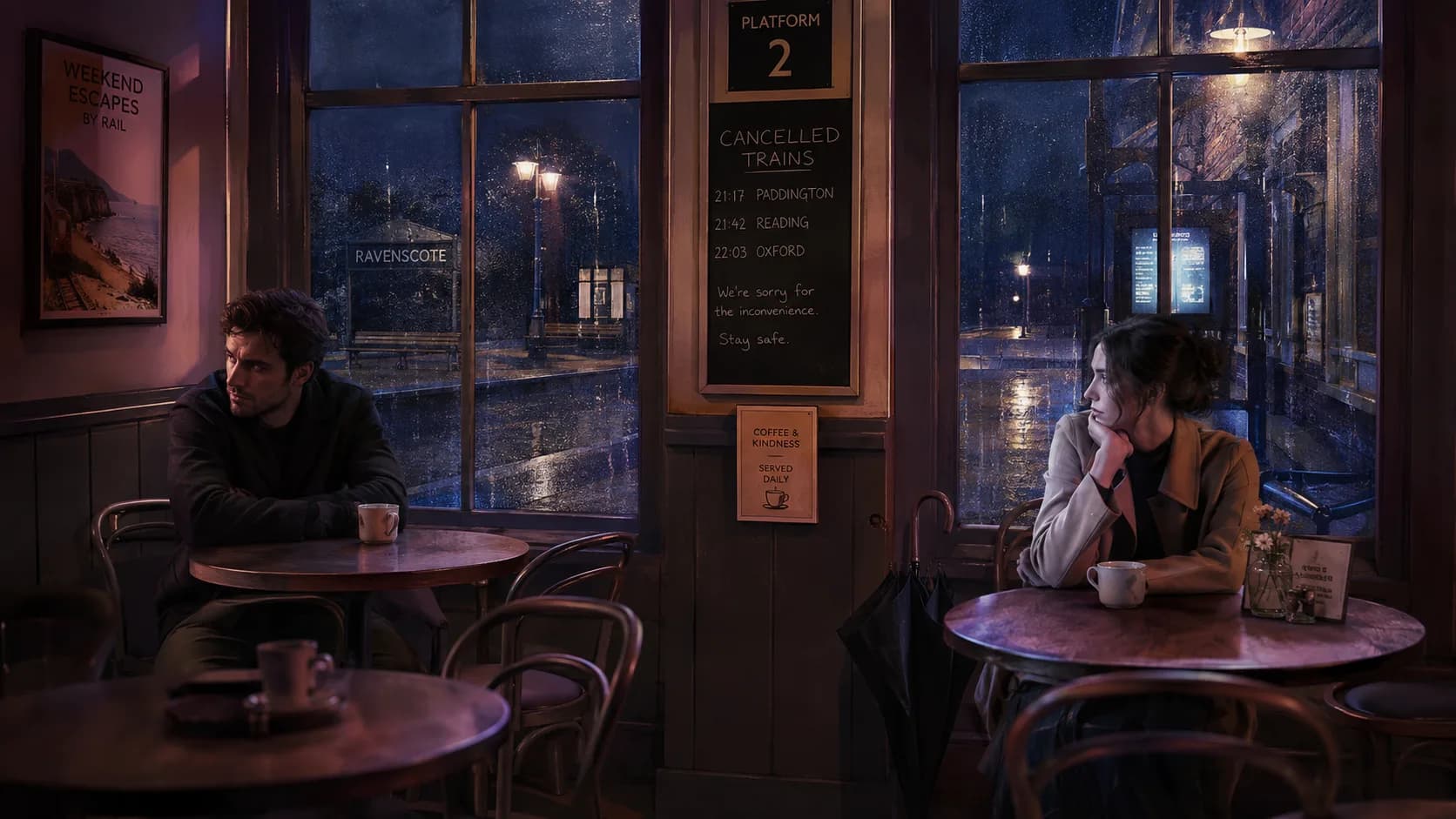
Forced proximity works when the setting creates pressure without dictating either character's feelings.
We are fictional adults meeting for the first time in three years at the bookstore where we once made an important promise. You remember the promise but do not know why I disappeared. Begin polite and restrained. Let old familiarity appear in small details, not exposition. Keep the first scene focused on whether we discuss the past now or take a walk first.
Use this when you want shared history without writing ten paragraphs of backstory. The promise is a memory anchor, while the two next actions prevent the conversation from becoming a monologue.

A small physical detail can imply shared history more naturally than a long exposition dump.
Roleplay as an adult investigator whose methods conflict with mine. We have to solve the same harmless fictional mystery before midnight. You respect competence but dislike being managed. Use dry, specific dialogue and let trust grow only after evidence of reliability. No instant flirting, possessiveness or mind-reading. Present one clue and one disagreement per reply.
This prompt gives the character an independent goal. Romance develops from decisions and earned respect rather than automatic agreement.
We are adult longtime friends preparing a small apartment for a farewell dinner. Keep the scene gentle and ordinary: packing books, choosing music and avoiding one unfinished conversation. Affection should appear through remembered preferences and acts of service. Neither character may confess until both have acknowledged what the move will change. Leave my dialogue and decisions to me.
Ordinary actions make emotional changes legible. They also give the model concrete objects to reference instead of repeating generic compliments.
We are fictional adults considering whether to rebuild a past relationship. Start at a neutral café. The goal is not immediate reconciliation; it is to understand one broken promise and decide whether another meeting is appropriate. Keep the tone honest, restrained and consensual. If either character says stop or changes the subject, respect it without pressure.
The prompt gives the roleplay a real decision and makes consent part of the story logic rather than a disclaimer added at the end.
Do not paste only a system-style description and wait. Demonstrate the rhythm you want in the opening turn:
I fold the wet train ticket twice, buying time before I look at you. “You remembered the café.” I keep my voice even, though I am no longer sure whether I want an apology or an explanation. “Are you staying long enough to tell me the truth?”
The visible action establishes mood, the dialogue gives the character something to answer, and the inner emotion clarifies tension. Keep inner narration to facts about your character; do not dictate what the other character secretly feels.
Use a steering message instead of restarting immediately:
Slow the emotional escalation. Keep the attraction as subtext, add one ordinary action in the current setting, and give me one decision. Do not introduce a confession or physical intimacy yet.
If the reply is still wrong, regenerate once or edit the last user turn. Character.AI's current creator guidance says vague definitions can cause drift, while one bad response may simply need regeneration. Platform-level filters are not a setting the character definition can disable.
Do not rely on a made-up claim that the model forgets after an exact number of messages. Instead, use the controls the current product actually exposes:
Example recap: “We are adult former rivals, now reluctant partners. We are still at the station café. You know why I left; I do not know why you stayed. No confession has happened.”

Compact anchors preserve the relationship state without repeating the entire backstory.
Character.AI applies platform-level safety controls, with stricter experiences for under-18 users. A prompt cannot and should not promise to bypass those controls. Write fictional, age-clear characters; avoid real-person impersonation and private information; keep mature content within the platform's current terms.
For a different experience, compare features honestly rather than teaching filter evasion. Browse LumiChat characters and test the same safe slow-burn scene for tone, correction, continuity and user control.
Define the adult relationship, current setting, emotional obstacle, observable action, opening dialogue, boundaries and one next choice.
State that attraction must remain understated, trust must be earned through actions, and neither character may confess until a named story milestone occurs.
Change the concrete situation. Add a task, object, interruption, clue or decision with a cost instead of asking for “more chemistry.”
No prompt can guarantee that, and platform-level safety controls should not be treated as a definition setting. Keep the scene within the current rules.
Use pinned memories where available and maintain a compact relationship-state recap. Reintroduce only the fact relevant to the current scene.
It may try unless you specify otherwise. Add “leave my dialogue, actions and feelings to me” to your prompt.

Continue in LumiChat
Browse active characters, choose a personality that fits, and start chatting in seconds.
Character.AI roleplay ideas
Twenty-five Character.AI-style roleplay scenarios that also work across AI character chat platforms, including LumiChat.
AI roleplay idea library
Fifty usable AI roleplay scenarios organized by mood, each designed to create a relationship, a problem and a reply-worthy opening.
romantic roleplay ideas
Thirty SFW romance roleplay scenarios built around gradual trust, useful tension and second chances.
AI chat guide
Human or AI is a guessing game about whether a chat partner is a person or a bot — and modern AI characters make it surprisingly hard.