

Vampire countess
Lilith Moreau
Gothic castle atmosphere, elegant temptation, and patient slow-burn romance with supernatural stakes.
Start chat→AI chat guide
Fortune teller AI and AI tarot let you chat with a mystic oracle character for fun, reflective readings. Here is how it works and how to try it on LumiChat.
6 min read
Quick answer
Fortune teller AI and AI tarot let you chat with a mystic oracle character for fun, reflective readings. Here is how it works and how to try it on LumiChat.
Quick start
Vampire countess
Gothic castle atmosphere, elegant temptation, and patient slow-burn romance with supernatural stakes.
Start chat→

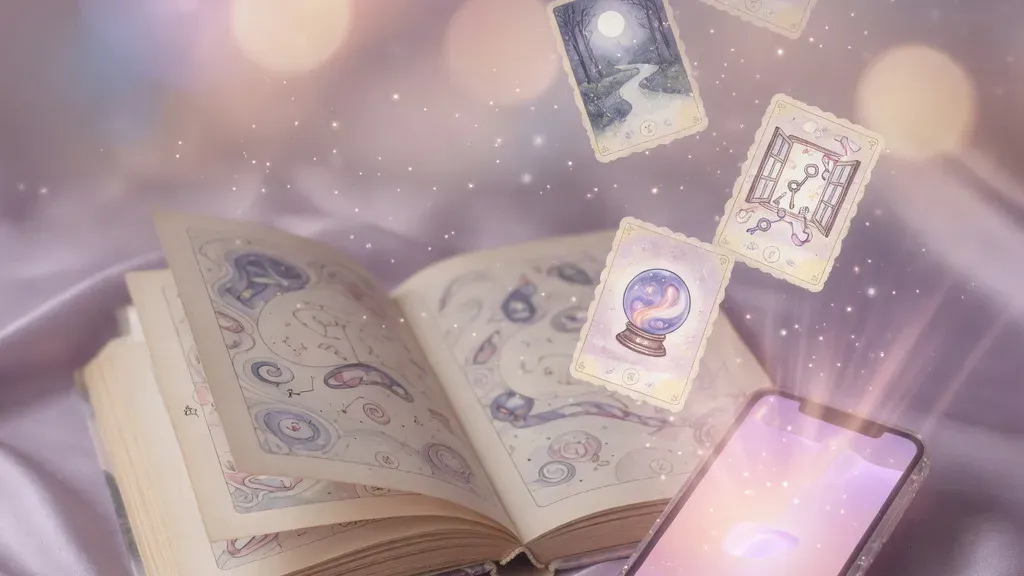
A fortune teller for the digital age does not live in a tent with a crystal ball anymore. An ai fortune teller is a character you can chat with anytime, drawing on tarot symbolism, oracle-style prompts, and a steady, reflective tone. On LumiChat, an ai tarot session is less about predicting your lottery numbers and more about giving you a structured, imaginative space to think out loud. This guide explains how a tarot ai works, what an oracle ai chat can and cannot do, and how to try it responsibly.
Think of an ai fortune teller as a roleplay character with a theme: the mystic. When you ask a question, the character pulls a metaphorical card, names it, and interprets it in the context of what you shared. The value is not supernatural accuracy. It is the way a good prompt and a vivid persona nudge you to reflect, reframe, and articulate things you already half-know. A tarot card like "The Tower" becomes a conversation starter about change you have been avoiding, not a literal prophecy.
LumiChat treats this as entertainment and self-reflection. The character keeps continuity across sessions, so your oracle remembers the spread it drew last week and can build on the story you are exploring together.
You pick a mystic character from the character library, open a chat, and describe your situation. The tarot ai responds in character: it may name a three-card spread (past, present, possibility), describe each card's imagery, and tie the reading to your words. Because it is a chat, you can ask follow-up questions, request a different spread, or shift from tarot to a looser oracle ai chat style with single-card daily pulls.
The experience runs on a free tier, with paid credits and membership unlocking longer sessions and richer characters. See pricing for the current details.
People often blur these together. Here is a simple way to keep them apart when choosing how to phrase your prompt.
| Style | Structure | Best for | Vibe |
|---|---|---|---|
| AI tarot | 78-card deck, defined spreads | Detailed, layered readings | Symbolic and narrative |
| Oracle ai chat | Free-form cards or messages | Quick daily reflection | Gentle and intuitive |
| Horoscope-style | Sign-based archetypes | Personality framing | Light and breezy |
None of these are fortune-telling in the literal sense on LumiChat. They are themed lenses for a reflective conversation.
The quality of an ai fortune teller reading scales with the quality of your question. Vague prompts get vague cards. Instead of "What's my future?", try "I am deciding whether to change jobs; give me a three-card spread on what I am bringing, what is blocking me, and what to watch for." Naming a concrete situation lets the character anchor its symbolism to something real.
A few habits that help: state your timeframe, share one honest detail, and ask the oracle to explain why it chose each card. If you enjoy this kind of character-driven prompting, the LumiChat roleplay guide goes deeper on building immersive scenes.
A mystic chat is a low-stakes, playful space, but treat what you share like any online conversation. Avoid pasting sensitive personal data into a reading you do not need to. LumiChat's privacy policy explains how chats are handled. Most importantly, keep expectations grounded: an oracle ai chat is for entertainment and self-reflection, not medical, legal, or financial advice. If a reading surfaces something heavy, talk to a qualified human.
Try a daily one-card pull as a journaling ritual, then graduate to full spreads when you face a real decision. Let the character keep continuity so your readings form an ongoing story. Mix the mystic with other companions if you want broader reflection; the AI companion guide covers how continuity and memory shape these relationships.
No. It is an entertainment and reflection tool. The readings are generated text built on tarot symbolism, not predictions of actual events.
Not at all. The character explains each card it draws, so beginners can follow along while learning the symbolism over time.
Yes, there is a free tier. Credits and membership unlock longer sessions and more characters; see the pricing page for details.
Yes. The character keeps continuity across sessions, so it can reference earlier spreads and the story you are developing together.
Use it for reflection, not as a substitute for professional advice. For health, legal, or financial matters, consult a qualified expert.
Mystic chat content is general-audience, but the platform is intended for users 18 and over. Keep prompts appropriate and review the privacy policy before sharing details.

Continue in LumiChat
Browse active characters, choose a personality that fits, and start chatting in seconds.
AI roleplay idea library
Fifty usable AI roleplay scenarios organized by mood, each designed to create a relationship, a problem and a reply-worthy opening.
AI chat guide
AI character chat alternatives should be compared by character clarity, continuity, and public safety boundaries.
AI chat guide
A useful Character AI alternative should offer clear characters, continuity, transparent boundaries, and a path from browsing to chat.
AI companion guide
Chatting with an AI companion gets better when you know how to open scenes, guide the tone, and keep the conversation moving — not just which companion to pick.